
The Table as Common Ground
One of the recurring challenges in post-conflict dialogue is finding spaces that belong to no one side. Formal settings carry history. Institutional environments signal power. Even the choice of location can become a point of contention before a single word has been spoken.
Food sidesteps many of these dynamics. A shared meal is, almost by definition, a collaborative act. Someone grew the ingredients. Someone prepared them. Someone set the table. Someone else arrived with the expectation of being welcomed. These are small gestures, but they accumulate into something significant: the experience of being on the same side, at least for the duration of a meal.
The Peace Cookbook, written by cultural envoy Wheeler del Torro in collaboration with the Foundation for Post Conflict Development (FPCD), is designed with this in mind. Its recipes are drawn from cultures that have often been positioned as distant, different, or defined primarily by their tragedies. To cook from these chapters is to encounter them differently, as sources of knowledge, craft, and generosity rather than subjects of concern. Each country represented in the book offers its own version of common ground.
Afghanistan: The Pre-Political Table
The Afghan obligation to feed a guest precedes political affiliation, ethnic identity, and historical grievance. It is, in a meaningful sense, a pre-political value, one that has survived every attempt that conflict has made to override it. The table in Afghan culture belongs to everyone who arrives at it.
Burundi: Shared Land, Shared Table
In Burundi, the connection between community and the land that feeds it is foundational. The plant-based traditions in this chapter reflect a relationship with food that is inherently communal, rooted in the understanding that the harvest belongs to everyone who tended it. That understanding is itself a form of common ground.
Cote d’Ivoire: Hospitality as Principle
In Cote d’Ivoire, hospitality is not simply a social norm. It is a principle, an expression of values that survived even the country’s period of civil conflict. The plant-based traditions in this chapter reflect a culture in which feeding others is understood as a fundamentally meaningful act. That understanding translates directly into the spirit The Peace Cookbook hopes to cultivate in every kitchen where it is used.
Cyprus: A Culinary Bridge
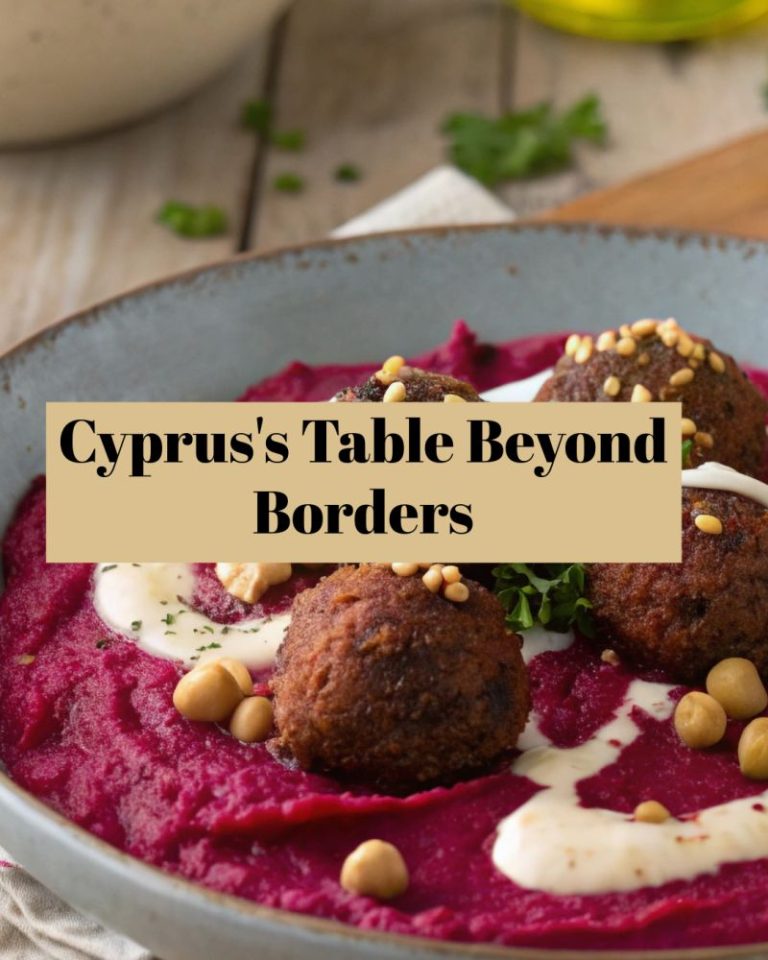
Cyprus offers a particularly vivid illustration of food’s potential as common ground. The island’s division has created two distinct political communities, but its culinary traditions tell a more complicated story. Dishes cross the line that politics has drawn. Ingredients are shared. Preparations overlap. The food knows something that the formal narratives do not always acknowledge: that these communities have more in common than their separation suggests.
Haiti: A Table That Holds
Haitian food culture has served as common ground through circumstances that would test any community’s cohesion. The communal traditions documented in this chapter reflect a people for whom the shared table is not a luxury but a necessity, a site of solidarity and collective resilience.
Monaco: Where Worlds Converge
Monaco’s role in The Peace Cookbook is partly symbolic and partly practical. As a site of international diplomatic engagement and a place where cultures genuinely meet, it represents what common ground can look like when it is cultivated intentionally. The cuisine reflects this convergence, drawing from French, Italian, and Mediterranean traditions in ways that are entirely its own.
Sierra Leone: Meals as Social Infrastructure
In Sierra Leone, the communal meal is infrastructure. It is how communities maintain connection, signal solidarity, and rebuild trust after rupture. The plant-based traditions in this chapter reflect a food culture in which eating together is understood to be as important as what is eaten.
Syria: Abundance as a Statement
Syrian hospitality is famous for its generosity, the insistence on abundance even when resources are limited. That insistence is itself a statement: that the guest matters, that connection matters, that the table is a place where differences are set aside. The plant-based recipes in this chapter carry that statement into every kitchen where they are prepared.
Timor-Leste: A New Nation’s Table
Timor-Leste’s food traditions represent common ground of a different kind: the shared table of a young nation still defining itself. The ingredients and preparations in this chapter reflect both the indigenous traditions that anchor Timorese identity and the openness of a people building something new together.
The United States: Finding Common Ground at Home
The United States chapter asks readers to consider common ground in their own context. American food culture is a story of traditions arriving from every part of the world and finding a place at the same table. That story, with all its complications, is itself an argument for what is possible when people choose to share a meal rather than draw a line.
The Peace Cookbook is not yet available for purchase. Register on its official website to be notified of its launch, and to express interest in securing a limited signed edition or attending the exclusive New York City launch event. All proceeds benefit FPCD.