
FPCD

About FPCD

Two decades of peacebuilding, from symbol to structure

The Foundation for Post Conflict Development (FPCD) is a global non-profit committed to helping post-conflict communities transition out of fragility.

Who we are

Bridging communities in need to partners with the capacity to help

Founded in 2005 in New York City in support of the UN Charter, FPCD bridges communities in need to partners with the capacity to assist their development. In 2015, FPCD expanded with a branch in Monaco. In 2025, the Foundation marked its 20th anniversary, a strategic turning point toward its role as a global reference for soft power in post-conflict transformation.

FPCD is strictly humanitarian and neutral. Allied with the g7+, it makes no judgement on the origins of conflict and promotes country-owned, country-led solutions for sustainable development.

2005

Founded in New York City in support of the UN Charter

20+

Years of humble, incremental peacebuilding experience

2015

Monaco branch established

g7+

Allied, promoting country-owned, country-led solutions

Our mission

Anchored in the UN Charter and the Sustainable Development Goals

FPCD’s mission is to support the UN Charter and to bridge post-conflict communities in need to those with capacity, through concrete projects that fulfill the United Nations Sustainable Development Goals. Our work impacts communities through health, youth and education projects, in the conviction that when communities focus on development, there is less reason to re-engage in conflict.

Maternal clinics, midwife capacity and community care that lower mortality and build trust.

Leadership formation and symbolic action for the next generation of peacebuilders.

Training, mentorship and knowledge-sharing that turn recovery into resilience.

What we do

Education, consultation, solution advocacy, project management and partnership promotion

We educate to empower the next generation of leaders and guide like-minded organizations to help foster more peaceful, tolerant, secure, and inclusive communities.

Education is the key to peace. We approach education by providing a lens into the local, regional, and global context of fragile states. Perspective matters, and the lessons of peace-building and state-building are applicable at all community levels. By having communities of individuals explore their own social, economic, and political context through The New Deal for Engagement in Fragile States, we introduce the shared principles of the Peace Building and State Building Goals (PSGs) and The United Nations Sustainable Development Goals (SDGs), which can be put into action. Through guided reflection, students and practitioners of peace building can begin to tackle the complex challenges of fragility. The FPCD empowers individuals to apply the concepts of peace-building and state-building to their communities, while providing the building blocks for creative solutions to complex problems.

The FPCD offers professional training and advanced education to corporations, organizations, institutions, governments, civil society, and universities that are operating, or have an interest, in fragile and conflict-affected states.

These programs are context-driven, with content and guest speakers tailored to cover topics of concern relevant to the specifics of the situation on the ground. All programs conclude with the development of a Declaration of Understanding and Commitment.

Our goals are to:

  • Interact with the international constituents of the g7+, the preeminent forum of 20 fragile and conflict-affected countries.
  • Plan the achievement of the United Nations Sustainable Development Goals.
  • Contribute and promote the peace building and state-building landscape.
  • Advance and comply with the New Deal for Engagement in Fragile States.
  • Maximize both tangible and intangible investments to ensure their sustainable impact.
  • Engage in robust dialogue with world leaders and experts.
  • Innovate with new modes of intervention.
  • Deepen the understanding of the peace building context using historical, social, and economic overviews to develop a more robust cross-culture sensitivity approach to the fragile context.
  • Engender trust by directly committing to a new standard of engagement.
  • Understand and recommit to the code of “First, Do No Harm.”
  • Develop a Declaration of Understanding and Commitment for each program.

Our consulting aims to build more peaceful and vibrant states that promote safety and security that contributes to the overall social and economic prosperity of the local, regional, and global landscape.

The mission of the FPCD is to fulfill the UN Sustainable Development Goals in post-conflict situations. The way we accomplish this is two-fold:

  • Empowering women through creating access to maternal health services, improving maternal health culture, and providing training opportunities
  • Empowering and engaging youth by creating recreational spaces that promote inclusion, support education, and encourage positive participation in society

The FPCD links post-conflict countries with goodwill partners to address these needs concretely. We implemented different programs in Haiti, Côte d’Ivoire, and Timor-Leste, according to local need.

We advocate to shift our understanding of the conflict and fragile context to provide more innovative and bold sustainable development solutions.

In 2000, The United Nations Millennium Development Goals (MDGs) were agreed upon by all member nations to eradicate poverty by 2015 and were required to report annually on their progress to achieving these MDGs.

By 2010, there was a distinct pattern in the reporting: no fragile or conflict-affected country had managed to make any substantial achievement toward meeting any of the MDGs, and it became evident that no fragile or conflict-affected country would reach any of the MDGs by 2015. The international community responded by supporting the g7+, a forum of 20 conflict-affected and fragile countries established to identify the unique challenges that fragile and conflict-affected countries generally face. For the first time in history, these countries, traditionally exempt from the more formal global diplomatic framework, demanded, “Nothing about us, without us.”

The g7+ has since provided the most significant advancement toward a better understanding of peace building in similarly affected countries in the last half-century. By 2015, when the push to achieve MDG standards had ended, a new global diplomatic framework was adopted: the United Nations Sustainable Development Goals 2015–2030 (SDGs). In developing and supporting the SDGs, the g7+ provided a profound shift in the way we do business in conflict-affected and fragile countries.

The g7+ stated that unlike other developing countries, its member countries had unique challenges, which they identified by creating peace-building and state-building goals. These goals must first be addressed locally before the global goals articulated in the MDGs and the subsequent SDGs can be pursued successfully. The g7+ then developed the New Deal for Engagement in Fragile States, which changed the way business is done in fragile and conflict-affected countries. All engagement would focus on the peace-building and state-building goals, which provided the strong foundations from which to then confidently pursue the SDGs. These aspirations were enshrined in SDG 16: Peace, Justice, and Strong Institutions.

The FPCD exists to promote the peace-building and state-building goals, The New Deal for Engagement in Fragile States, and the United Nations Sustainable Development Goals, and in particular, SDG 16: Peace, Justice and Strong Institutions. Our goals are designed to meet the objectives defined in these accords. Our advisory, educational, and advocacy context is based on those tenets, as defined by the g7+. We aim to promote, protect, and advocate for these principles as a means to build peaceful countries.

The FPCD helps manage country-owned and country-led projects that provide pathways to peace.

The most enduring sustainable development is country-owned and country-led. We understand that when it comes to improving the situation in a conflict-affected and fragile country, a range of priorities across multiple sectors and subsectors must be considered. Beginning in 2005, the FPCD has responded to the needs of several countries with expert assistance and programs that are still thriving to this day.

The FPCD’s top-down, bottom-up approach ensures that every intervention has the broadest possible consultations, from the Head of State or Head of Government to the local community. Our priorities range from maternity clinics to youth centers, from environmental to agricultural initiatives, and even involve veterans’ programs. We have gained a reputation for responding to the needs of individual citizens while delivering broader, successful programs in various countries, while also taking an active part in forums at the global level to advocate for post-conflict and fragile countries. By 2010, the FPCD had built maternity clinics that served as a model for best practice for the establishment of youth centers training hundreds of youths across post-conflict countries, including Timor-Leste and Haiti.

To accomplish shared objectives, the FPCD produces special events for governments, corporations, organizations, and institutions. From inception to creation, the FPCD provides services for events, each tailor-made to promote specific, designed outcomes. All events support local peacebuilding and state-building, contribute to the international development landscape, and achieve acceleration and advancement of the United Nations Sustainable Development Goals.

The FPCD develops innovative bilateral and multilateral partnerships that offer a unique combination of advantages for our client countries.

The FPCD acts as a critical nexus that binds multilateral partnerships with a focus on peace-building and state-building. Our headquarters are strategically located in New York City and associated with the United Nations systems. We have a branch in Monaco, serving Europe and Africa, and a presence in Asia-Pacific is envisioned. The Foundation aligns with the principles and policies of the global diplomatic frameworks set amongst and between United Nations member countries. We act as neutral arbiters and are well versed in providing the infrastructure and processes to promote mutual understanding and shared outcomes.

The FPCD is proud to support the g7+, 20 fragile and conflict-affected countries, and we have formed critical and long-lasting partnerships with the Democratic Republic of Timor-Leste, the host country of the g7+.

Current and past partners include, among others, the Government of Monaco, the Government of Timor-Leste, the Permanent Missions to the United Nations of Monaco, Liechtenstein, Qatar, Italy, Angola, and Namibia, the UN Staff 1% for Development Fund, the Doha Bank, the Prince Albert II of Monaco Foundation, the Monaco Red Cross, Fight Aids Monaco, the Princess Grace Hospital (Monaco), Fondation Sancta Devota, HOW Global USA, the Guerra Book Project, the Office of the Mayor (New York City), the Gabarron Foundation, the United States Sports Academy, the International Olympic Committee, Fundação Xanana Gusmão, Peace and Sport, and AMREF.

We continue to seek bold and innovative partnerships.

Letter from our Founder

A world awash in fragility

The United Nations announced 2021 would represent the greatest humanitarian crisis since its inception, 75 years ago. Conditions once exclusive to nations emerging from war are now conditions shared by all nations as they continue to battle COVID-19 and the extreme effects of climate change. When I founded the FPCD in 2005 to address the unique needs of post-conflict nations, I could never have imagined that less than two decades later, the globe would be awash in fragility.

Today, the loss of life from COVID-19 and the global climate crisis is impacting many nations. The combination of conditions is set to plunge 10% of the world into food insecurity. Two decades of progress in the reduction of extreme poverty, the cornerstone of the United Nations Sustainable development goals, has been pushed into sharp reverse.

We face unprecedented times, urgent action is required to address the climate crisis, pandemics, conflict, and economic pressures — all of which cause human displacement and suffering.

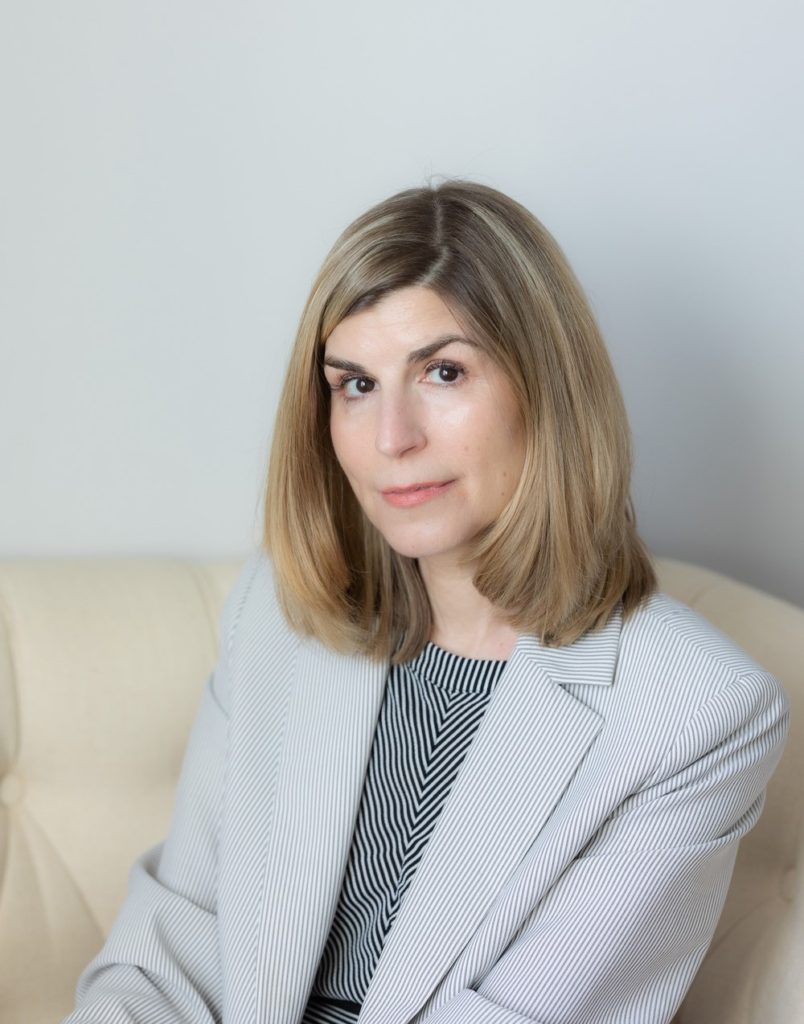
Claudia Abate
Founder & President
At the United Nations

Associated with the UN Department of Global Communications since 2009

As an organization associated with the United Nations Department of Global Communications, FPCD actively promotes the work of the United Nations. Its accredited delegation follows the proceedings at UN Headquarters and takes part in UN conferences and events, including the UN Civil Society Conference.

FPCD also organizes side events with diverse partners, bringing the voices of post-conflict communities to the global stage.

Governance & branches

One mission, delivered through two complementary branches

United States

FPCD Global

Strategic direction, UN engagement, global partnerships, cross-regional fundraising and governance, anchoring the Foundation’s worldwide coherence from New York.

Principality of Monaco

FPCD Monaco

The Post Conflict Development Association of Monaco represents FPCD at UN conferences and events, organizes side events with diverse partners, and leads event diplomacy and symbolic programming.

Transparency

A registered 501(c)(3) non-profit

FPCD is recognized as a tax-exempt, charitable organization under U.S. Internal Revenue Code section 501(c)(3). Its annual federal tax return (Form 990), tax-exempt application, IRS determination letter and annual reports are available for public inspection on written request to the Foundation office.

Our Strategy 2026–2030

The Soft Power Axis: a Cultural Diplomacy Pact restoring presence, memory and dignity in post-conflict societies.