
The Institute of Post Conflict Development
The Story
Pondu: A Dish That Brings Hearts Together
Désiré MUSAFIRI RASHIDI is a Congolese project and programme management specialist committed to youth empowerment, humanitarian action, community development, and peace building.
Through his experience with UNICEF DRC, UNDP, YMCA-YWCA DRC, and Junior Achievement Africa, he has contributed to community mobilization, youth engagement, and strengthening young people’s participation in development initiatives. His work has also involved supporting initiatives focused on resilience and post-conflict contexts in the Democratic Republic of the Congo.
Deeply connected to Congolese culture and heritage, Désiré also uses storytelling, food, and cultural transmission as powerful tools for fostering social cohesion, preserving identity, and strengthening resilience within communities affected by conflict and crisis.
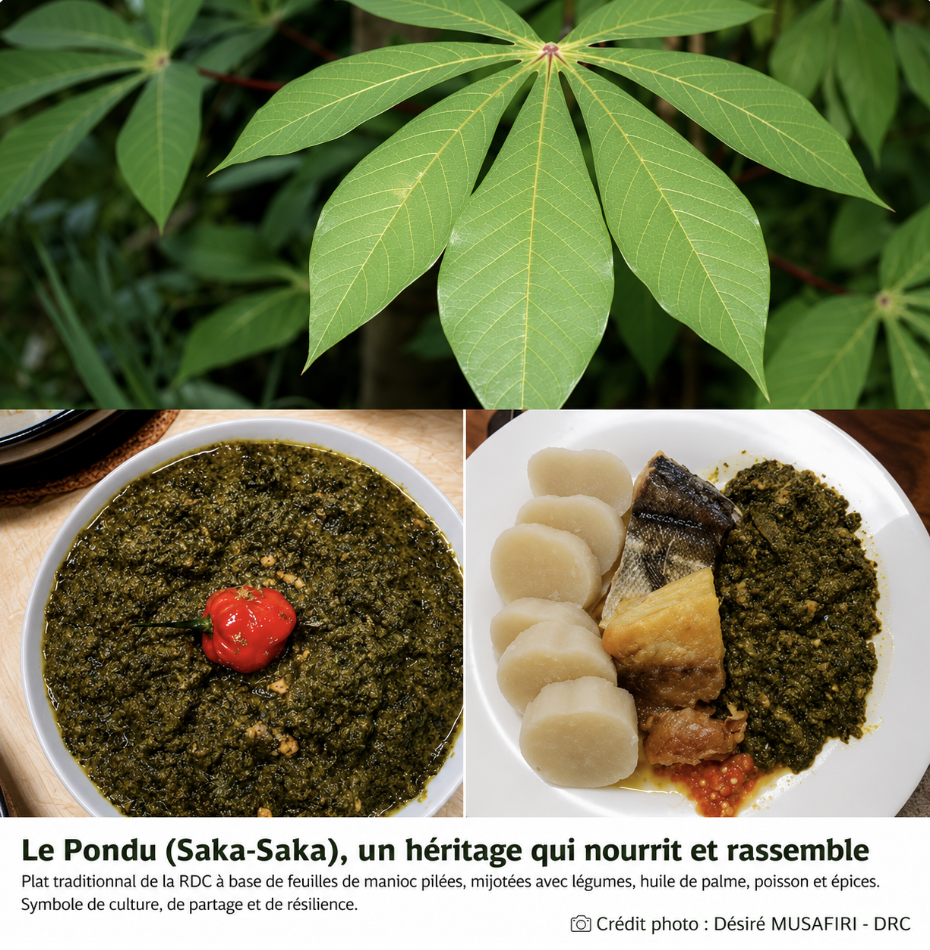
Pondu, also known as saka-saka, is an iconic traditional dish of Central Africa, particularly in the Democratic Republic of the Congo. It is prepared from pounded cassava leaves, slowly simmered with vegetables such as leeks, eggplants, onions, and bell peppers, combined with palm oil, smoked or canned fish, and a blend of spices. It is traditionally served hot with rice, plantains, or foufou. More than just a meal, pondu is a symbol of our cultural identity and theway we live, share, and connect with one another.
Whenever the aroma of pondu fills a home, it brings back cherished memories of my childhood. I remember my family gathered in the kitchen, each person contributing in their own way. The adults carefully prepared the ingredients while the younger ones watched, learned, and helped whenever they could. These moments were about much more than cooking; they passed down essential values such as respect, solidarity, patience, and generosity from one generation to the next.
Pondu also brings people together far beyond the family circle. In my country, it is commonly served during celebrations, community gatherings, association meetings, and whenever guests are welcomed into a home. Regardless of language, background, or social status, everyone naturally finds a place around the same table. Conversations become warmer, smiles appear, and barriers begin to disappear. Food becomes a universal language that everyone understands.
In the eastern Democratic Republic of the Congo, where armed conflicts have displaced millions of people and severely disrupted livelihoods, pondu carries an even deeper meaning. Cassava leaves are widely cultivated across many parts of the country and, when available, they provide a nutritious meal at a relatively affordable cost. For many families, pondu represents a way to maintain dignity and preserve cultural traditions despite hardship. Beyond its nutritional value, it offers a sense of continuity, comfort, and belonging during times of uncertainty.
Through my work in community development and youth engagement, I have learned that sharing a meal is often the first step toward building trust. Before discussing projects, peacebuilding, or cooperation, people need a welcoming environment where they feel respected and connected. A shared plate of pondu often opens sincere conversations, strengthens relationships, and reminds us that we have far more in common than what divides us.
This photograph above therefore represents much more than a traditional dish. It tells a story of heritage, resilience, unity, and hope. Pondu is a legacy that we proudly pass from one generation to another, but it also conveys a universal message: peace can begin around a shared table. Through the simplicity of a plate of pondu, we discover that food has the power to preserve culture, strengthen communities, and build bridges between people. To me, this is the true meaning of culinary diplomacy.
Recipe
Ingredients:
500 g pounded cassava leaves
2 leeks, chopped
1 eggplant, diced
1 onion, chopped
1 bell pepper, chopped
3 tablespoons palm oil
200 g smoked fish (or canned fish)
2 cloves garlic, minced
Salt and black pepper to taste
Water as needed
Instructions:
1. Wash the cassava leaves if fresh, or thaw if frozen.
2. Heat the palm oil in a large pot and sauté the onion, garlic, leeks, eggplant, and bell pepper.
3. Add the cassava leaves and mix well.
4. Add the smoked fish, season with salt and black pepper, then pour in enough water to cover the mixture.
5. Simmer over low heat for about 1½ to 2 hours, stirring occasionally, until the leaves are tender and the flavors are well combined.
6. Serve hot with foufou, rice, or boiled plantains.
“The views presented here do not necessarily represent the views of the Foundation for Post Conflict Development. They serve as a people to people exchange of information based on values of respect and desire for cultural and diplomatic understanding without judgement. All points of view are welcome and are necessary to better understand the context of post conflict development. It is in this spirit that the FPCD created this Institute.”